Live Courses
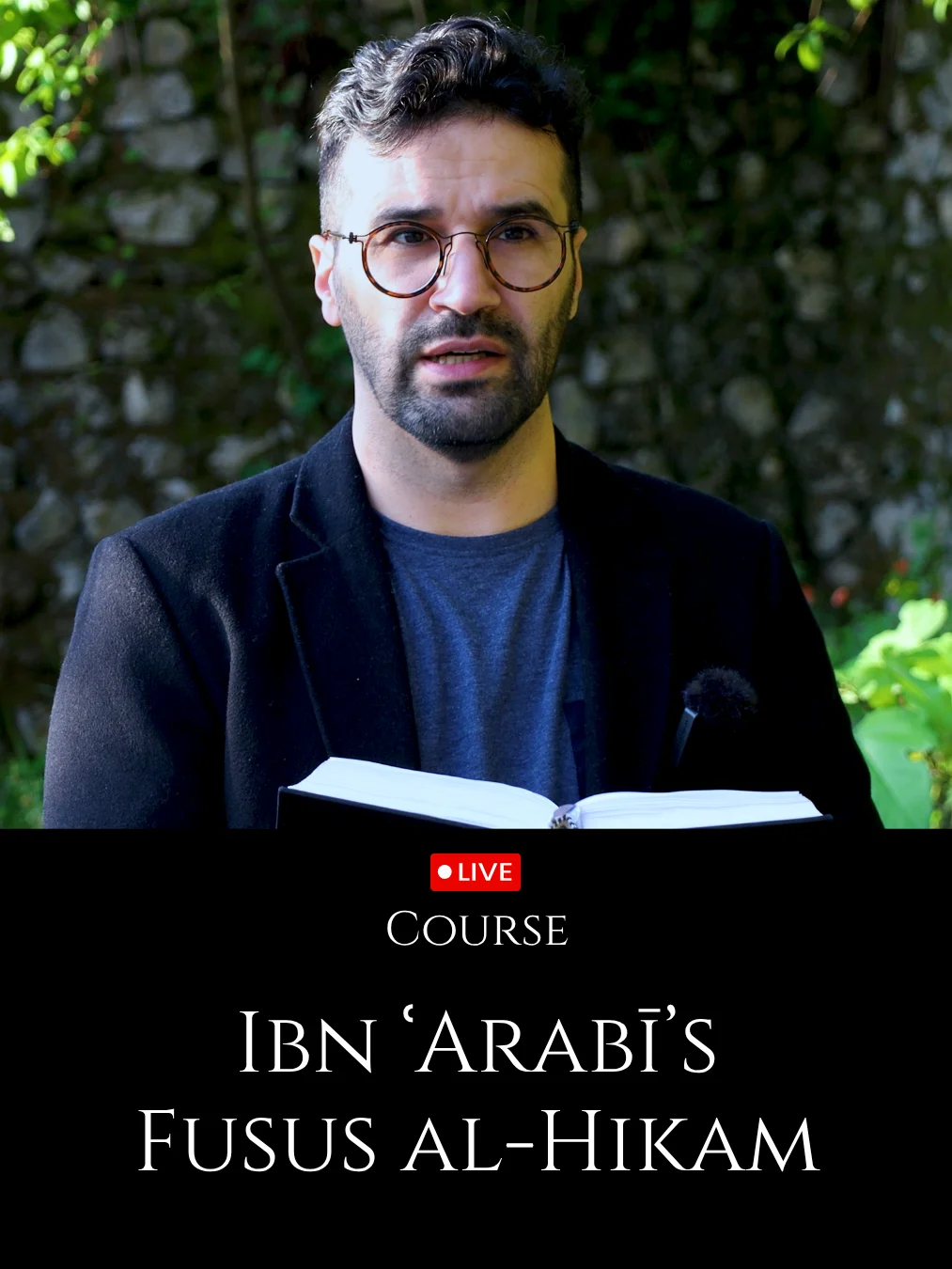
Ibn ʿArabī’s Fuṣūṣ al-Ḥikam (12 Weeks)
- Instructor: Rasoul Rahbari-Ghazani
- Duration: 3 months
- Format: Live weekly seminars + guided readings + discussion + Whatsapp group
- Language: English
- Course start: Just started (first meeting recorded and available)
- Early registration: $50 OFF (included)
In this live, interactive course (live Google Meet seminars), you will explore one of the greatest masterpieces in the history of mystical thought, Ibn ʿArabī’s Fuṣūṣ al-Ḥikam (Seals of Wisdom). In teaching this book, I draw upon the most authoritative classical commentaries—Qūnawī, Qayṣarī, Jāmī, and Kāshānī—alongside key contemporary scholarship, to provide a rigorous, structured, and accessible interpretation of this profound text. Whether you’re a student of sufism, Islamic philosophy, or metaphysics, or simply curious about Ibn ʿArabī’s complex thought, this course will deepen your understanding of one of the most influential works in the Islamic intellectual tradition. Join me, and let us undertake this journey through the wisdom of the Fuṣūṣ together.
For those who prefer monthly payments, WE HAVE A MONTHLY MEMBERSHIP. Please check our memberships.
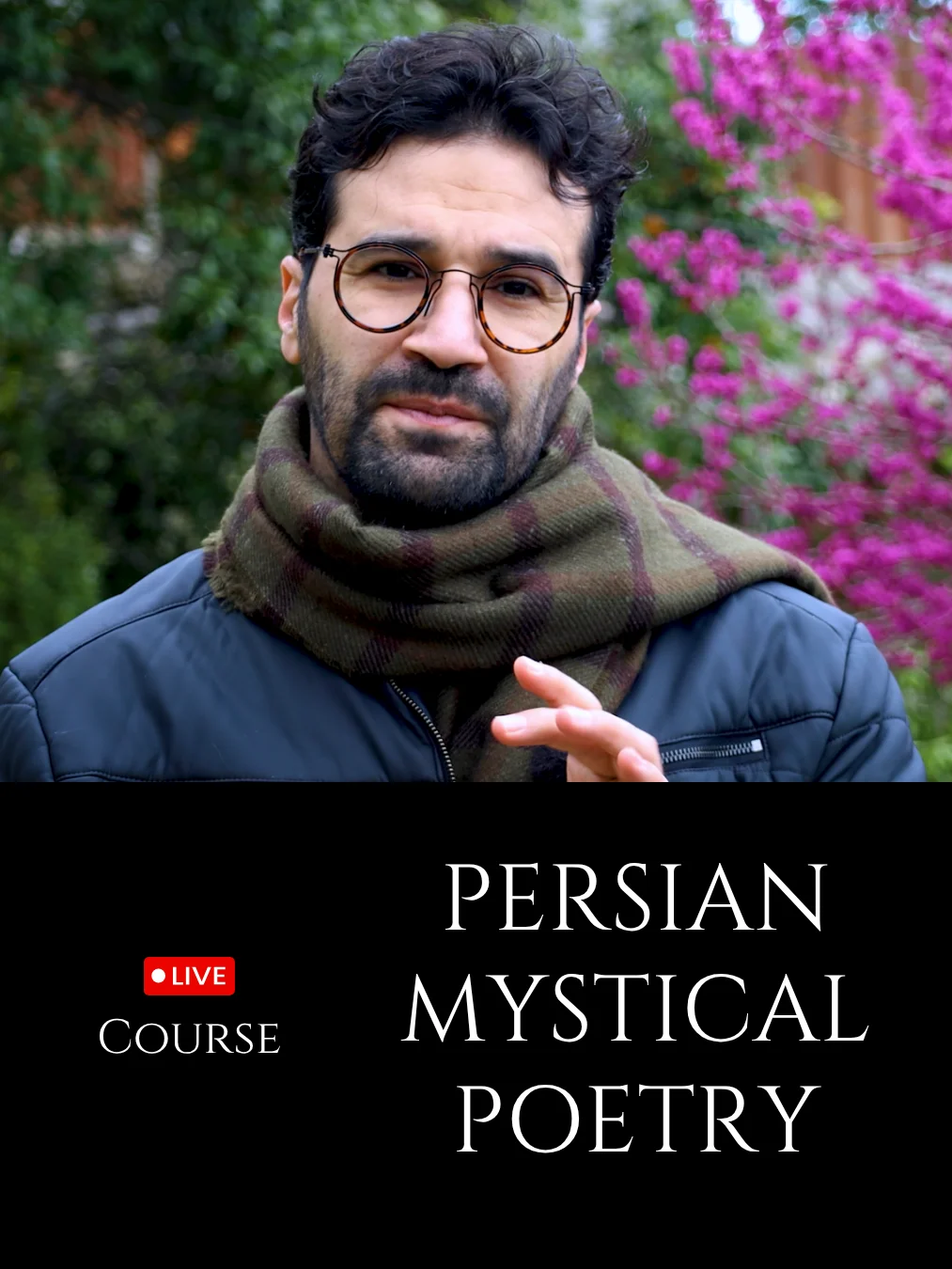
Persian Poetry: Phenomenological and Hermeneutic Analysis
- Instructor: Rasoul Rahbari-Ghazani
- Duration: 8 Weeks (Online)
- Format: Live weekly seminars + guided readings + discussion + recordings + Telegram group
- Language: English (with Persian texts and translations provided)
Course Description. This eight-week online course offers an in-depth exploration of Persian poetry through the combined lenses of phenomenology and hermeneutics—two powerful philosophical approaches that investigate how texts are experienced, how they disclose worlds and transform understanding. Rather than treating poetry as a collection of historical artifacts, this course approaches Persian poetry as events of meaning, structures of experience, and invitations to interpretation. Drawing from thinkers such as Gadamer, Heidegger, Ricoeur, Ingarden, Iser, Levinas, Marion, and Merleau-Ponty, and engaging poets such as Rūmī, Ḥāfiẓ, ʿAṭṭār, Fayḍ Kāshānī, and others, we will learn how to read Persian poetry not only analytically but experientially—as something that happens to us. Throughout the course, we examine how poetic language opens worlds, shapes ethical imagination, and engages the reader in a transformative interplay between text and self. Each week, pairs key philosophical readings with carefully selected Persian poems to practice phenomenological and hermeneutic interpretation in real-time.
8-Week Course Outline
-
Week 1: What Does It Mean to “Experience” a Text? Reading as an event, not a decoding exercise.
Play and presence; Rūmī’s ghazals as lived poetic moments. - Week 2: The Literary Work as an Incomplete Object: Reader & Text. How the reader “completes” the poem; layers of the work; phenomenology of reading; ʿAṭṭār’s visionary journey in Conference of the Birds.
- Week 3: World-Disclosure and the Imaginal. World-opening; Rūmī’s Masnavī as a structure of truth; The imaginal realm as poetic ontology.
- Week 4: Voice, Address, and Dhikr: Repetition as Form. How apostrophe, vocatives, and refrain create a participatory mode of reading; Rūmī and Fayḍ Kāshānī as poets of invocation and remembrance.
- Week 5: Longing, Love, and Self-Transcendence. Phenomenology of eros and desire; comparing mystical love across Rūmī, Ḥāfiẓ, and Fayḍ Kāshānī.
- Week 6: Symbol, Metaphor, and Unsaying. Poetic symbol and metaphor as disclosure and concealment; Ḥāfiẓ’s symbolic lexicon as hermeneutic field.
- Week 7: Attunement and Mood: How Poetry Shapes Our Being-in-the-World. How do poems attune us to a world—how do they shape our mood, our sense of presence, and our way of being-with-others?
- Week 8: Hermeneutic Circle, Ethical Imagination, and Transformation. Can poetry change how we see the world? The idea of literature as training in attention; concluding readings from Rūmī, Ḥāfiẓ, or Fayḍ Kāshānī.
Course Format
- 8 weekly live seminars
- Guided reading packets (Persian + English translations)
- Access to recordings after each session
- Telegram group for questions and peer learning
Who Is This Course For? Ideal for:
- Students and scholars of philosophy, literature, Persian studies, or religious studies
- Readers of Persian poetry seeking deeper interpretive methods
- Anyone interested in phenomenology, hermeneutics, or the philosophy of art
- Those who want to experience poetry as a transformative practice
No technical background is required—translations and conceptual introductions are provided.
All texts are provided as PDFs.
Philosophical Mysticism & Mystical Philosophy: Western & Islamic Perspectives
- Instructor: Rasoul Rahbari-Ghazani
- 8-Week: Online
- Format: Live online sessions (recordings available after each session) + guided readings + Exclusive WhatsApp Group
- Level: Open to all motivated learners; no prior background required
- Start: Early January 2026
- Early Registration: 50% OFF for December registrations
Course Description. This program provides a clear, structured, and intellectually rich exploration of the relationship between philosophy and mysticism across Western and Islamic traditions. Drawing on prominent works from William James, William Alston, Richard H. Jones, Ibn ʿArabī, Plotinus, Suhrawardī, Henry Corbin, Mullā Ṣadrā, and Rūmī, this course provides both a philosophical analysis of mysticism and a philosophical study rooted in mystical insight:
Part I: Philosophical Mysticism: The philosophical study of mysticism as a phenomenon: analyzing its epistemic claims, linguistic strategies, metaphysical interpretations, and ethical implications.
- How have philosophers understood mystical experience?
- Can mystical states yield knowledge?
- Is mystical language necessarily symbolic or metaphorical?
- What is the ethical significance of mystical life?
Part II: Mystical Philosophy: Philosophy written from within a mystical horizon: systematic ontologies, epistemologies, and ethical visions grounded in mystical realization.
- How do mystical realizations give rise to full philosophical systems?
- How do concepts like the oneness of being, emanation, illumination, or modulation of existence express lived mystical vision?
- How do thinkers such as Ibn ʿArabī, Suhrawardī, Mullā Ṣadrā, and Rūmī articulate metaphysics, psychology, and ethics from within a mystical horizon?
8-Week Course Outline
- Week 1: What Is Mysticism? Philosophical Definitions & Types of Experience.
- Week 2: The Epistemology of Mystical Experience. Can mystical experience justify belief? Is it analogous to perception? We explore debates surrounding epistemic justification and philosophical critique.
- Week 3: Mystical Language, Symbolism, and Ineffability Can one speak about the ineffable? How do mystics use paradox, metaphor, and symbolic discourse to express non-ordinary experience?
- Week 4: Mysticism and Moral Transformation. How does mystical experience shape character, ethics, and spiritual psychology? We explore the moral dimension of mystical life and the transformation of the self.
- Week 5: Mystical Philosophy: Ibn ʿArabī and the Metaphysics of Oneness. We enter the second movement of the course, exploring philosophical systems grounded in mystical insight. Topics include waḥdat al-wujūd, unity, divine presence, and metaphysical imagination.
- Week 6: Plotinus and Neoplatonic Emanation. We examine the philosophical framework of emanation, the One, Intellect, and Soul—key concepts that have shaped both Western and Islamic mystical philosophy.
-
Week 7: Illuminationism & the Mundus Imaginalis. Suhrawardī’s philosophy of light, the imaginal realm, and Henry Corbin’s interpretation of imaginal perception.
We explore the metaphysics, psychology, and ontology of the imaginal. - Week 8: Sadrian Ontology & Ecstatic Love Mysticism. Mullā Ṣadrā’s modulation of being and Rūmī’s ecstatic metaphysics of love. We conclude by asking how mystical philosophy integrates ontology, ethics, imagination, and spiritual psychology into one living vision.
Course Format
- Weekly live meetings
- Guided readings
- Access to recorded sessions
- WhatsApp group for questions and updates
Who Should Enroll?
- Students and scholars of philosophy, mysticism, or religious studies
- Those interested in consciousness, metaphysics, and the philosophy of spiritual experience
- Anyone seeking a structured introduction to the philosophical analysis of mysticism
No prior academic background is required.
All texts will be provided as PDFs.